

Madeleine Moments
✦✧ Proustian travels prompted by Perlenbacher Pils, the combination of toothpaste + drains, and, finally: the vacuum cleaner.

It is one of the most famous scenes in literature: near the beginning of the first volume of In Search of Lost Time, the narrator tastes a spoonful of tea in which he has allowed a small piece of madeleine to soften and, through the labyrinthine pathways of taste, is eventually carried back to his childhood. The scene is famous partly because it belongs to a monumental work, but also because the reader can so readily recognise the wonder of having an entire universe within oneself, ready to unfold as soon as the correct combination has been entered.
In Marcel Proust: Life, Suffering and Doctors, the Swedish physician Carl Lindgren tells the story of the French writer’s life from a medical perspective, an approach that proves unusually successful in this particular case. The chapters have titles such as “Self-Medication”, “Asthma and Worms in the Stomach”, “Toothache and Noise”, “Fear of Germs” and “Glasses to No Avail”.
Lindgren highlights one event as decisive for the work and the cake scene, namely Marcel’s treatment for neurasthenia1 at a sanatorium in 1905-1906. There, the neuropsychiatrist Paul Sollier included conversations intended to revive repressed memories2 as part of the treatment, something Sollier called reviviscences (this closely resembles what Proust would later call involuntary memory, a central theme of the novel sequence, of which the madeleine is the foremost example3).
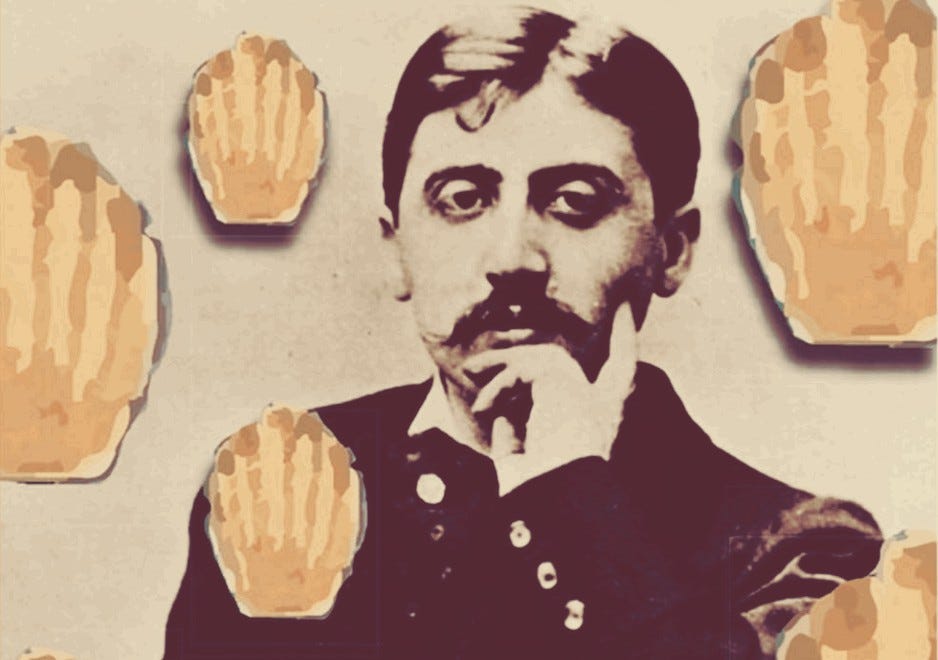
After his treatment at the sanatorium, Marcel began sketching out what would become his masterpiece. The possible connection is further strengthened by a notebook in which he developed the framework of the novel and wrote Sollier’s name beside a central note on involuntary memory.
Whatever the truth of the matter, it is entirely certain that we have Proust to thank for The Bagatelles. As I have mentioned before, I was signed off work a few years ago for a period because of burnout, which paradoxically gave me enough peace to embark upon In Search of Lost Time. At the same time, I was enrolled in a stress management course through my local health centre, where we were taught to set boundaries, do one thing at a time, meditate and use outdoor gyms.
One day, we were given an assignment: do one thing you enjoy every morning. Inspired by my friend Marcel, I decided to try each morning to encapsulate a feeling in memory and in writing. Preferably one as small and self-contained as possible, and then to describe it fully, in as much detail as possible. You know, like taking a sip of Perlenbacher Pils from Lidl and being hurled back to a volcanic expedition on Lanzarote?
No? You soon will.
Welcome away ꩜
Jörgen Löwenfeldt

✦ The Conquerors of Lanzarote ✧
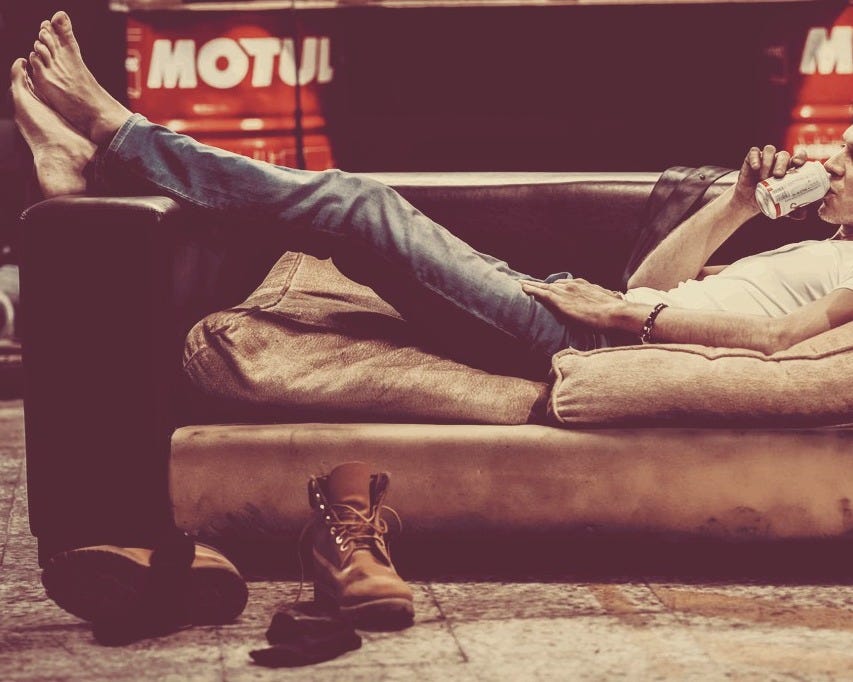
Something of a madeleine moment occurs when I take my first sip of Perlenbacher Pils, bought at Lidl, and let the pale, meaningless, almost tasteless drink trickle through me, carrying me back to a balcony on Lanzarote one December many years ago, when I was about to become a father and therefore needed, in the months beforehand, to roam around a little before everything presumably became static.
Back then, the pale lager was called San Miguel, renowned among connoisseurs for being perfectly acceptable even when lukewarm. Jeppe and I drank litres of it in our sun loungers while breathing in the slightly chilly Atlantic air, dressed in jumpers and jeans, and it was nothing like the spontaneous sun and swimming package holiday we had intended.
When we were not occupying the balcony and drinking beer, we sat indoors and drank beer, with the addition of the World Snooker Championship, to which Eurosport devoted all its airtime during those days. The routine had been there waiting to be discovered. We drifted into it without resistance.
To make the beer consumption easier still, we munched chilli marinated corn snacks, which gave me a rash, yet were so addictive, but they gave me a rash, but were so addictive. And this continued for five days at least, with equal parts beer, snacks and snooker, until one morning on the balcony Jeppe pointed towards the volcano on the farthest edge of the horizon and said:
Tomorrow we will be standing at the top.
He might just as well have pointed at the moon, so inconceivable was the prophecy in the warm alcoholic haze. So impossible that it nevertheless became something to yearn for, rather like Knausgård, after the anguish of the years with small children, forcing six novels into existence under the pressure within. And Jeppe’s voice was resolute. He was tired of this sluggish existence, which had admittedly lasted only a few days, but possessed a life-denying monotony equivalent to decades.
Early the next day, we began our determined march, heading directly towards our destination, up slopes, across property boundaries and over solidified lava. In the distance, across the magma, we spotted a guard dog charging towards us, and we raced in panic up and down the Martian landscape like soldiers fleeing through a hail of bullets. There was no right of public access here, we realised slightly too late.
Someone whistled the mutt back, and we were saved and able to continue upwards, and after many hours of wandering we stood at the summit of the volcano, beside a shabby mobile phone mast and heaps of old newspapers and advertising leaflets. My heart beat proudly in my chest. The feeling that nobody had ever been there before, which had of course already been disproved, but at least no package tourist. We were not like them. We were conquerors.
And so we strolled all the way back, eventually landing on the balcony with aching joints after what must have been thirty thousand uphill steps, cracked open a San Miguel of uncommon sweetness, munched the corn snacks and felt worthy of the moment, I think as I sit on the sofa drinking my Perlenbacher Pils, letting the meaningless drink run down my throat as I put on an episode of Rome I have not yet seen and allow the images to take over my thoughts.
Has The Bagatelles become part of your routine?
Join the small inner circle that keeps these letters alive.
It costs $5/month, or $2.50/month if you choose the yearly option.
These are the lowest prices Substack allows.
This is what you get access to in the inner circle:
My newest bagatelles first, shared privately in the readers’ chat (including those in this dispatch).
Access to the readers’ chat, where you can discuss the pieces with me and other readers.
All long-form writing, including my blog from living in Ingmar Bergman’s house, all chapters of Naïveté Travels, the story Paradise City and the short story Atlas. And more.
Three full novels in separate publications: Zenopolis, BARDO NOIR and The Last Siamese. I’ll add you manually.
All bagatelles placed behind the paywall (which I use as a filter, so I don’t have to share everything with the world).
And you’ll be supporting my work, helping me keep sharing my fiction with readers in more than 100 countries.
✦ Car Showroom ✧

I am brushing my teeth when a combination of toothpaste and a stale odour from the drain fuses into the smell of a car showroom. A highly distinctive smell, rarely conjured anywhere except inside these hangars on the outskirts of town, filled with new vehicles, no doubt deliciously perfumed so that the buyer can breathe in his future.
He can compare it with the reek of chips in the car he drove there in. Because it is a he. The entire arrangement is built around this he who is meant to feel like a winner. Leather and a newly built engine, exclusive plastic and untouched tyres awaken the man’s desire for another man inside the man, proud and assured and suddenly within reach. The note of the door closing, with precisely the right balance of softness and firmness in its suspension, and then that indoor feeling inside the cabin. A new solitude settles in, in which one’s new self makes its entrance as a promise of greatness, of superiority, something that will spread into one’s behaviour in every other room, as though the scent were transferred to the owner: a man with a V8, who can effortlessly glide into the overtaking lane and quite legitimately remain there, perhaps for the rest of his life.
I could live here, the man thinks.
For a period, I frequented car showrooms often. Not because I took the initiative myself, but because I was a child, and children have to adapt to their parents’ interests, and my father liked new cars. Nor did I have any objections to the destination, since there was often hot chocolate in the machines at the back beside the sales offices. The drink dripped mechanically into brown plastic cups, which heated the skin so fiercely that I had to change hands from time to time. The tip of my tongue soon went numb. There was also often a bowl of hard blue sweets wrapped in plastic, which I cracked between my teeth to gain time. The lozenges were really too strong. A foretaste of spirits, perhaps, and probably just as well to get used to it, to stretch the taste buds upwards.
At times I wandered alone among the cars, which stood like flagships beneath the high, long rows of windows. For how could these untouched vessels possibly have been brought across the gleaming floor, something as inconceivable as driving over herringbone parquet? As a rule, I settled into one of the more expensive makes, breathed in the fumes of exclusivity, brought my palm towards a gear lever decorated with wood, but took care not to touch the handbrake. Sometimes the radio could be switched on.
Then I placed my fingers over the steering wheel and imagined driving, without imagining in the slightest that I might one day actually drive. A boy cannot drive, and how could I imagine myself as anything other than a boy?
I understood, however, that somewhere inside these cars lay the key to something decisive, something capable of awakening the desire of other men. The newer the car smelled, the better, more masculine and more competent the driver, a man who could afford it and also possessed enough sense of smell to understand how to prioritise. A capitalist test of manhood, effective because everyone bought into the concept.
Sometimes we were allowed to take a test drive, to feel the surge of acceleration on the motorway, but then the smell vanished, the same smell that unexpectedly drifts towards me as I finish brushing my teeth and hurry towards the door. I have a doctor’s appointment to keep and must catch the metro.
✦ A parallel dimension ✧
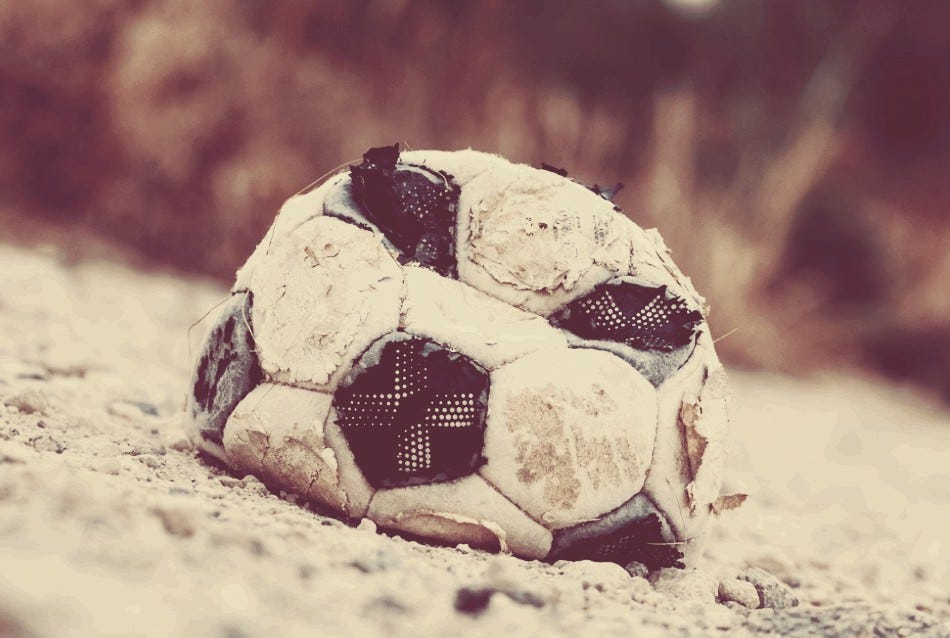
The vacuum cleaner rolls onto the yellow Ikea rug in his son’s room, and the father calls out encouragingly, “You’ve made it look so nice,” when, for no apparent reason, the brain shifts into detailed memories of the football pitch at primary school.
Why, he cannot understand. The brain simply does it. Somewhere in the tangle of associations produced by Saturday cleaning, this place has been brought to the fore, found in a forgotten archive, examined at one of the conferences of the unconscious, and apparently there is reason here and now to return to the gravel, the goal frames of white painted wood, the feeling of a stitch across the chest, but above all the fence that frames the pitch in and the world outside it out.
On the other side are the gardens of detached houses. A parallel dimension, constructed in a way that makes it almost impossible for the children to comprehend. People probably exist there in ordinary life, living beside the most public of public places, wandering around the houses in slippers, slurping coffee and reading the newspaper, day after day, as anonymous to the pupils as neighbours in a residential complex, despite being only a few metres away. They might just as well have pitched a tent in central Stockholm.
The children speculate about the homeowners, some better informed than others, because some have been to the other side in pursuit of a stray ball, climbing the high fence when a teacher looked away and finding themselves in a stranger’s garden. Descending like an astronaut, urgently trying to retrieve the ball before some neighbouring creature caught sight of them and perhaps became angry about the intrusion, or the noise, or the kinds of things faceless adults might do to a child in the imagination.
Nobody has seen them. There is speculation that an elderly couple live there, but if that were true, surely they would be visible throughout the day, unless they were deliberately keeping out of sight. More likely they work office hours, but nobody knows and nobody will ever know. The children continue playing their matches, making noise during penalty shootouts and sending balls over the fence, while the neighbours continue being neighbours, unknown and permanently present, while the years drift onwards and the child becomes a father vacuuming another child’s room and is flung backwards and forwards through time, like a stray thought or ball.
Psst. A new chapter every Sunday:
Thank you for reading.
– Jörgen Löwenfeldt ✦ jorgenlowenfeldt.se
This dispatch went out to readers across 106 countries. If it resonated with you, consider sharing it with a friend who might feel the same, leaving a comment, or recommending it on your own Substack.
A warm thank you to the sponsors of The Bagatelles. Your belief in my work keeps me going, and as a paid subscriber you have access to all long-form content, including the novels Zenopolis, Bardo Noir and The Last Siamese.
Do you have any feedback, ideas, or questions? I answer selected questions in dedicated Q&A dispatches: send them through this form.
You might enjoy this story in five parts:
No Better Beginning Than a Terrible Ending

Nearly five years ago, following a burnout, I quit social media. Everything went quiet and peaceful. When I took photos, it was to document, not to broadcast to an imagined digital audience. But this isn’t a piece about leaving social media, there are plenty of those already. It’s about what I did instead.
✦✧ Looking for the archive? You can find every post here.
An umbrella term for various conditions doctors did not understand at the time, all of which were believed to involve a disorder of the nervous system. Marcel’s actual ailments were related to his airways and gastrointestinal problems.
With no connection to Sigmund Freud, the author maintains.
One of the favorite books of my literature teacher in highschool..one book that he insisted on reading . Can't say I regret his insistences.
This. All of this. Every word is a step toward revelation.