

The Generalist’s Revenge
Three bagatelles from the end of the rabbit hole: ✦ Russian Roulette ✧ Where The Story Ends ✦ Free Fall

“Your claiming of all different threads of your life, without apology, is a gift!”
Those were the words of a kind reader after visiting my about page.
It hasn’t always been this way, though. For a long time, I believed you could only be one thing, because that’s how society is rigged: in favour of specialisation. When that didn’t quite work out, I tried being (just) two things at once: project manager with one hemisphere of the brain, writer with the other.
A bit later still, I realised that everything eventually proves useful. Just not right away. Every meeting, hug, book, sketch, trip, setback. All of it.
The ebb and flow of life has taught me this: if you see a rabbit hole, fall willingly into it, no matter where you are (say, at work), because everyone involved will benefit from the consequences. Again: not right away. Doors open, as long as you’re wise enough to walk through a few.
Today, I’m a proud generalist. Which is also why I’m able to offer three very different bagatelles in this dispatch: Russian Roulette (a little bit shaped by reading Mircea Cărtărescu’s Nostalgia), Where the Story Ends (inspired by a friend cleaning up after her father), and Free Fall (a thought that surfaced three decades too late).
Welcome away ꩜
Jörgen Löwenfeldt

✦ Russian Roulette ✧
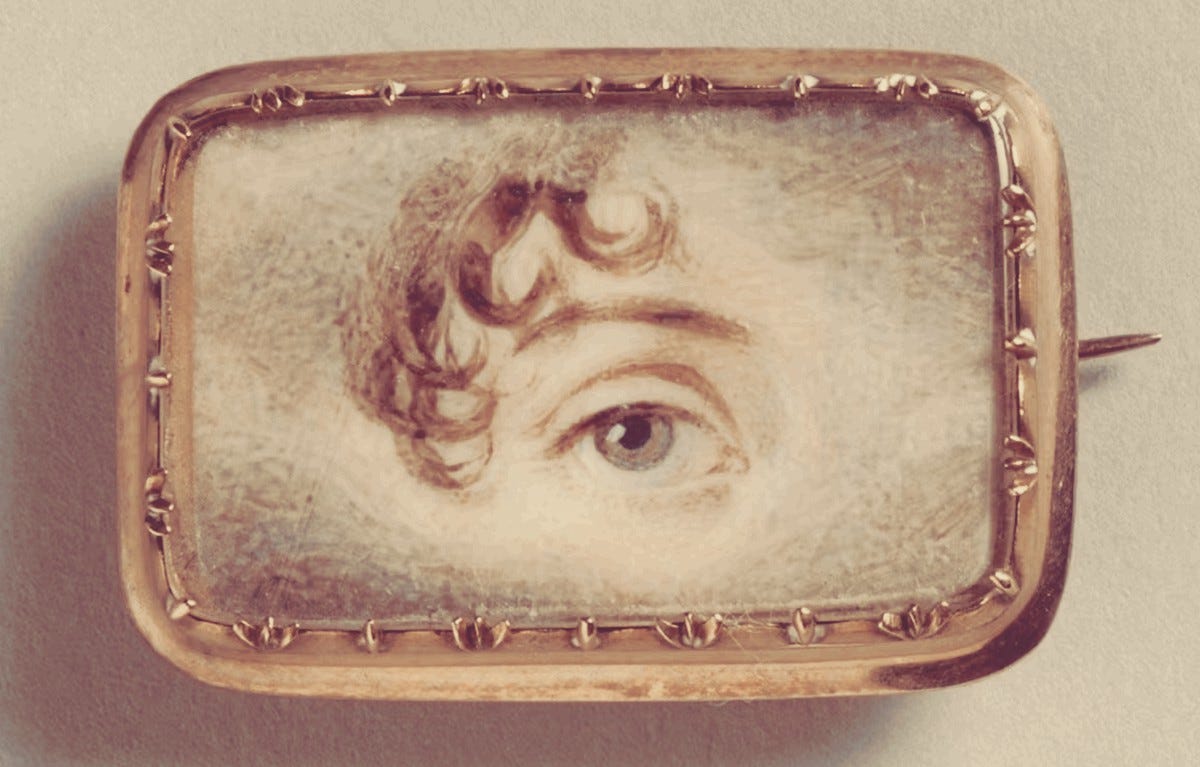
I hadn’t been in touch with my feelings for a long time. A film had settled over everything I experienced, as uniformly grey as depressed patients describe their pill-dulled days: a shrinking spectrum of possible life experience. In my desperation to expand, I pushed my comfort zone, sweating through salsa clubs, giving speeches in schoolroom German, grinding down my fingertips on climbing walls, but all that striving led only to a weary so what.
When I saw the note outside the boxing club, a sliver of life cut into the desolate room within me. Russian roulette. I’d heard the term anecdotally and of course I understood the rules, everyone understands the rules, but does everyone understand the desire? To spin the cylinder, press a cold revolver to your temple, squeeze the trigger, and wait. Perhaps a life beyond this one, or a life within this one. To place everything in the hands of a maybe. Maybe fate.
Maybe not. The venue for these potential executions was a basement beneath a massage parlour on Närkesgatan. No one spoke to anyone. It seemed to be an event for loners. I tapped on a hunched-over guy leaning against the ventilation pipe and asked, “How does it work?” His eyes looked wild, bloodshot and disturbingly alive. “It’s one thing to make it once”, he rasped, “another to make it six times”. “Holy shit”, I said. “The record is fifteen”, he said, nodding toward a woman in a pearl necklace and high heels.
Unlike my conversation partner, there was nothing unusual about her demeanour. She looked more like a dutiful accountant summoned to keep minutes so the shareholders’ meeting would have reliable documentation of every intermezzo.
The revolver was placed on a folding table in the center of the room. Around it, three plastic chairs. I followed the contestants with my gaze, how these muscle mountains and gangsters slowly took their seats and gradually lost their strength, took their turn and click. Not once did the bullet fire. It didn’t stop the players from collapsing afterward. The stench of urine became unbearable. Some, still living, bodies had to be pushed aside to make room for the next. It became clear we weren’t playing with life but for it.
When the final round took place, the woman stepped forward. She let the cylinder spin a few times, placed the barrel against her forehead, and pulled the trigger. Another click. Casually, she put the weapon back on the table and returned to her seat, as if she had just tested the mechanism. The whole scene had set my heart pounding. I was breathing hard, elated. Surely my range had widened from the vision I’d just been blessed with, as if I’d experienced her death anxiety in her place. How could I thank her for my pulse? How could she ever understand?
Out on the sidewalk, I followed her to exchange a few words. She seemed to have slipped quickly back into a civilised persona, and needed a moment to recall where she’d seen my face. She asked: “Why don’t you try it yourself?” I said I was planning to join in next time, though it was a lie. “There is never a next time, and always”, she said. “What’s your secret?” I asked. Her face stayed motionless. “I live off reactions like yours”, she said.
✦ Where The Story Ends ✧
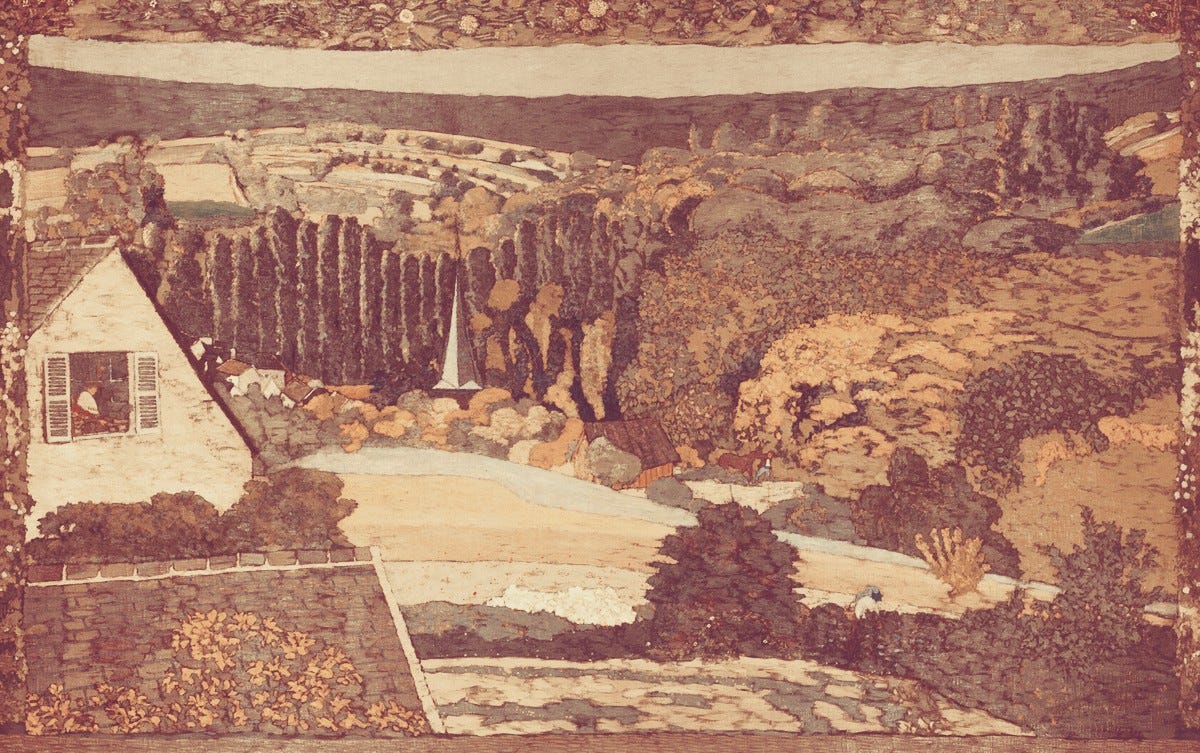

The story doesn’t really begin. It continues, like everything else, hooking onto something already there and pulling away in a direction. But whatever came before doesn’t concern this particular tale, which begins at an end: the barn by the country road, where he died and left everything behind for the relatives to clean up.
Now they pull into the driveway, the gravel going quiet beneath the tires as the engine is turned off. The dumpsters will come later, for now, they’re just here to look and go through “the flea market,” as they call their father’s hoarding habit. He saved everything: receipts, passport photos, dressers, weekly flyers from the local grocery store. Not because it might come in handy someday, but because it hurt to throw things away and felt good to hold on to them, as if each item made him a little more real, even important. Yes, for lack of anything else. After all, he lived out here, far from them and from his past. It’s too late now to know what went through his mind as he wandered among the clutter, day after day, even the bathtub filled with clay pots and spindle-back chairs. All that remains is the place, which his children now wade through, trying to make sense of the hours they’ve spent on work, decorating, and scrolling through friends’ vacation photos. He always seemed a bit put out when they called, they say in their own defence, so it felt intrusive — something to do only when there was a proper reason, like a holiday or something, but not spontaneously. He didn’t like that sort of thing, did he?
A damp, musty smell rises from every room. Every object seems on the verge of turning to mulch and is well on its way. “Should we be more thorough, maybe take some more time?” the daughter asks. “No, we can’t,” says the son. “We have to throw it all out, none of us has room at home.” And so they roll up their sleeves and get to work, lifting dressers and dried plants together, bundles of rotting newspaper ads and Tuborg bottles from the eighties. After a few hours, they can make out patches of the floor beneath, stained and uneven. As if to underline, one last time, that a man once lived here who gave up. “Why didn’t he ever say anything about this?” the daughter asks. “We knew,” the son says. “Don’t be silly.” He starts tackling the stacks of phone books.
They spend the night upstairs, which they cleared out first, unrolling sleeping bags and mats like when they were kids and the house was a summer cottage, before he sold the apartment and barricaded himself in here. That scent of damp timber was there then too. It only takes one breath of it to remember other days — when everyone was young and the biggest problem in the world was how concentrated the juice should be before taking the cart down to the beach. Or the time the neighbour’s son cut his finger to the tendon. Or when lightning struck the roof and they had to live by candlelight for a week. The memories settle over them like dominoes before they finally fall asleep, to the whispering of birch trees brushing against the house.
The next day they wake at the same time, aching in every joint, with coffee in a thermos and a few sandwiches to eat on the stumps by the driveway. When they step out of the room, they have to squint several times. The junk is gone. They haven’t cleared out here, have they? And they definitely haven’t mopped the floor or polished the windows. The hallway to the galley kitchen is just as bare and tidy, the stairs down to the living room free of garden gnomes, the kitchen empty of pots and wine glasses, the basement storage cleared of broken-down mopeds. Even the bathtub is clean and gleaming. A secret benefactor has taken care of everything. The objects gathered over decades now lie in the dumpsters, teleported there, neatly arranged as if by a meticulous archivist.
“Are you kidding me?” the son asks, poking through the pile with a stick, trying to make sense of what’s happened. “No, I don’t know either,” the daughter says. “This is insane,” says the son. “I don’t know whether to feel relieved or creeped out,” the daughter says.
They have four more days set aside for work, but no work left to do. They sit on the porch, take each other’s hands, as if the warmth of skin might anchor them in physical reality. “Maybe we should go to the store and pick up a few things?” the daughter says. “There’s nothing in the cupboards.” The son replies, “Don’t we need a bit more time to process this? I feel completely dizzy.” He scrunches up his face like he’s just tasted something bitter. The daughter smiles and then starts to laugh. When she stops, she says, “You’ve always been so damn logical. Let’s get some coffee and then ride our bikes down to the beach and think happy thoughts about Dad.” “Okay,” the son says. “Sounds like a plan.”
✦ Free Fall ✧
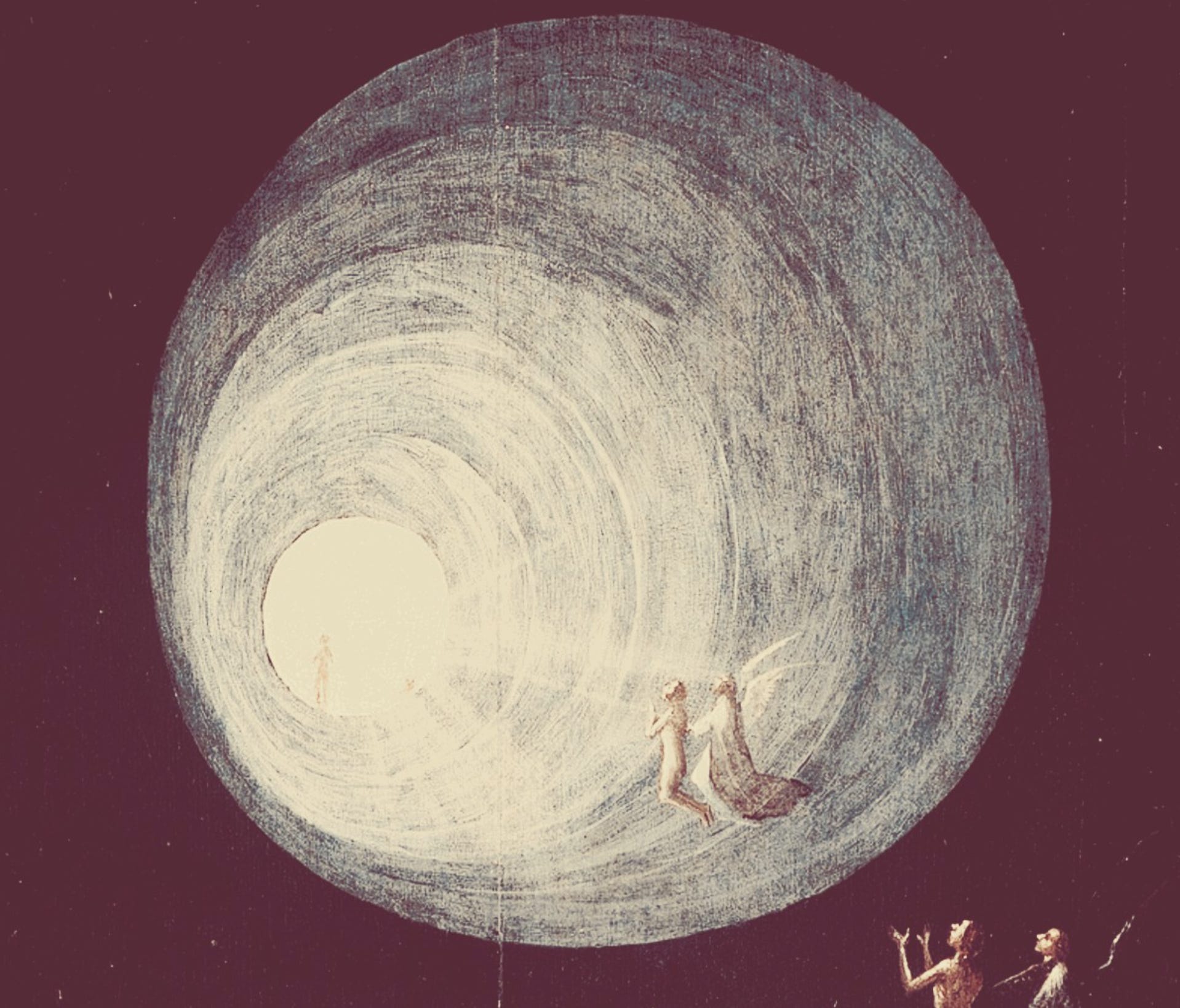
Pretty often, entirely meaningless events get stuck in the memory, like irritating refrains. But sometimes it’s the meaningful ones that fail to grasp their own significance, he thinks after watching the program on near-death experiences, awakening an episode long since forgotten.
Three decades earlier, the family spends a week in Sälen in August, climbing the high mountains among the gnats, picking cloudberries, and fishing farmed Arctic char in the lake. On the way home they stop at a summer amusement park in Leksand, where the event will take place.
A crucial element for the memory is the embarrassing secret, which for the child carries the same weight of shame as it would for a grown man to admit he’s never been kissed. The ten-year-old has never ridden a roller coaster. A fact that exposes him as cowardly, nearly useless, and out of sync with the expectations he has of himself.
The topic of amusement rides comes up often, like in the woodwork or the locker room after hockey practice, and when others boast about upside-down rides, loops and vomit, he quietly slips away, barely able to imagine going on one even in thought. No one must ever know.
Nor will anything ever change, because he is not the kind of person who rides those things. That’s just how it is. That’s just who he is. Always will be, he believes — just like so many other things he believes and will come to believe.
That afternoon in the nineties, however, he finds himself in line for an attraction that doesn’t seem risky at all. Beside it is a raft. It’s cranked a few meters up a steep incline, before a latch is released and the passengers rush downward. The finale consists of a splash into a pool, before the process repeats. Even small children are riding. He can too.
But it is actually quite high, he realises a little too late, and when the latch gives way to gravity, his body is shocked into panic. The lurch in his stomach is the first of its kind. As he plunges toward disaster, his whole life flashes before him, just like in the movies. Moments streak past in reverse, like slide transparencies rapidly pushed in and out of the projector. An inner editor seems to have curated it all beforehand, like those prewritten obituaries waiting for their deaths. And just as the body falls, so do the moments, toward their zero point — the last of the kind he shouldn’t remember. “So this is what it’s like to die”, he has time to think before hitting the water, and everything goes still.
He never tells anyone about it. The reaction wouldn’t be appropriate, and it would reveal the tightly bound secret. Best to wait thirty years before thinking about it again.
Thank you for reading.
– Jörgen Löwenfeldt ✦ jorgenlowenfeldt.se ✧ bagatellerna.se ✦
This dispatch was sent to the three hundred and twenty kindred spirits. If my writing resonated with you, consider sharing it with a friend who might feel the same, or leave a comment.
A warm thank you to the four sponsors of The Bagatelles: Billy, Björn, Mafalda and Tamara. Your belief in my work keeps me going, and as a paid subscriber you have access to all content, including my literary diary (currently open to all subscribers).
I have always evolved in circles that made me ashamed to be a generalist, even though I have always found joy in that. I think that it's the very essence of a writer to be able to fit in any kind of shoes. The Russian Roulette story is striking, just short and intense enough to keep its aura of excitement and mystery. Well done.
I am fellow generalist and curiosity is my superpower! 🙌