

The Last Siamese
✦✧ A new novel of magical realism, autofiction and wild imagination.

Prepare for a summer of magical realism. A manuscript I’ve never shown to either publishers or agents.
Why? Let me elaborate. Among other things, because I can. I’ve kept my day job, and my creative fate is therefore mine to steer as I please1. Also, a little, because the first thing I do after finishing a novel is write another one, and then another. The selling part is not really for me, so I prefer to postpone it, and then postpone it again. Should you wish to assist, please do get in touch.
This summer I will be taking you on a journey through a vanished landscape: the city of Norrköping as it was in 2007.
The Last Siamese is a novel about an intern at the local newspaper (who shares a name with this writer), a missing colleague (who shares a name with my friend and former colleague), a Turkish folklorist, the girlfriend back home, and a cat: Alice. It is fiction, but not pure fiction. Rather, it is a magical realist hybrid of what happened, what-ifs and wild imagination. So be careful where you step.
As you are now used to, I’ve decided to give this story its own publication, to make sure I only have readers who have signed up to read a full novel. Subscribe below:
A new chapter will be published every Sunday. For the first two weeks, each chapter will be available for free. After that, it goes behind the paywall and will be readable only to paid subscribers of The Bagatelles.
Welcome away ꩜
Jörgen Löwenfeldt
Has The Bagatelles become part of your routine?
Join the small inner circle that keeps these letters alive.
It costs $5/month, or $2.50/month if you choose the yearly option.
These are the lowest prices Substack allows.
This is what you get access to in the inner circle:
My newest bagatelles first, shared privately in the readers’ chat.
Access to the readers’ chat, where you can discuss the pieces with me and other readers.
All long-form writing, including my blog from living in Ingmar Bergman’s house, all chapters of Naïveté Travels, the story Paradise City and the short story Atlas. And more.
Three full novels in separate publications: Zenopolis, BARDO NOIR and The Last Siamese. I’ll add you manually.
All bagatelles placed behind the paywall (which I use as a filter, so I don’t have to share everything with the world).
And you’ll be supporting my work, helping me keep sharing my fiction with readers in more than 100 countries.

✦ The Last Siamese, chapter 1 ✧
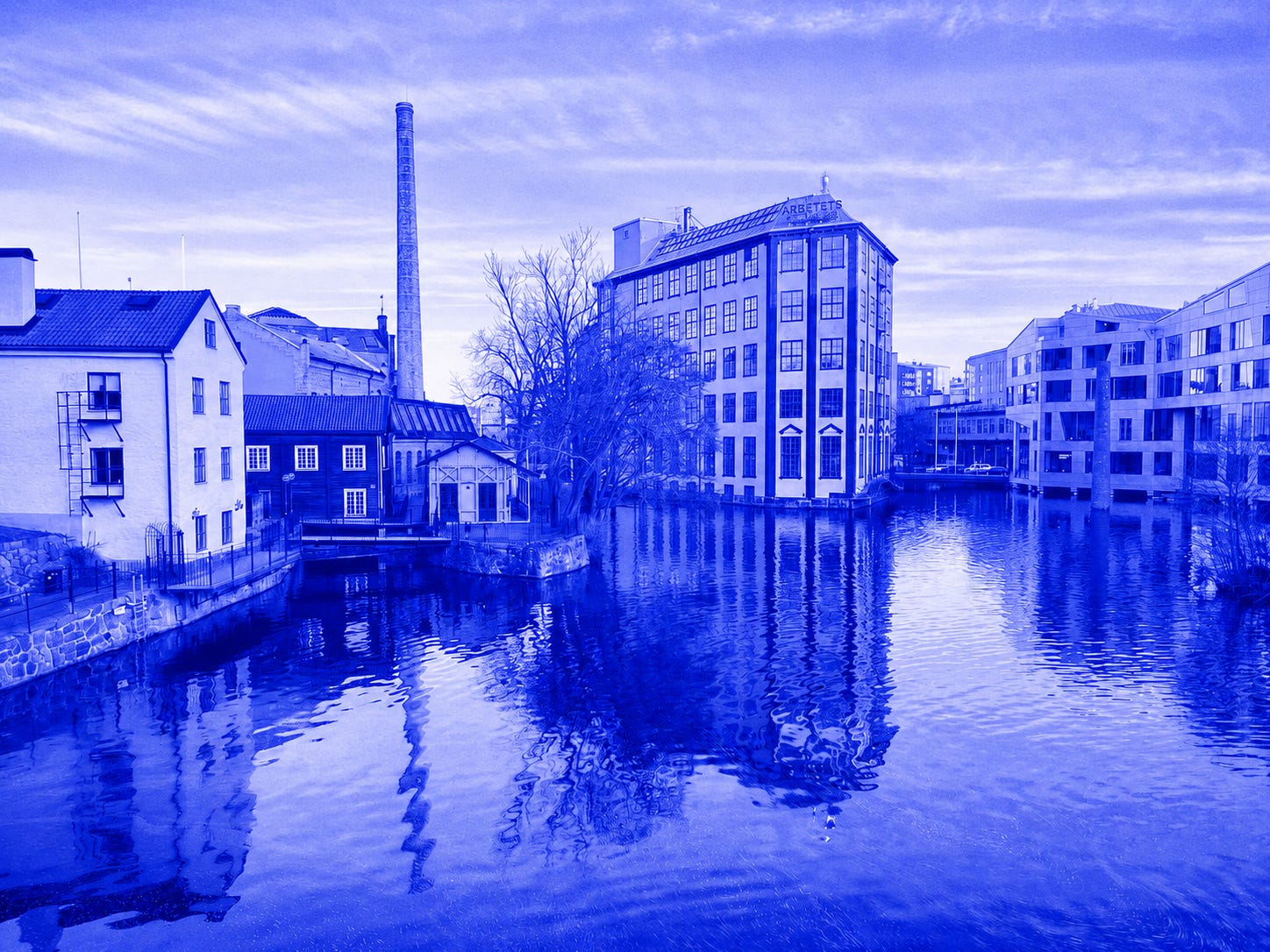
In the autumn of 2007, naturally, none of what would later happen had yet happened. I was an intern on the culture desk at Norrköpings Tidningar, commuting weekly to the second-hand flat on Plankgatan, furnished by a career soldier who, after his time in Bosnia, had come to hate impressions. Grey wallpaper. Dead furniture. Pill bottles above the fridge.
From there I fled into various whims. After borrowing a paperback edition of the novel New Year from the city library, I asked whether it would be all right to interview the writer, Stig Larsson. We met at Rosa drömmar and his breath wafted pear cognac. Afterwards he wanted to change all the more reasonable quotes, but keep the megalomaniac ones (he was the greatest since Thomas Mann). A few weeks later I met Roberto Saviano, together with his interpreter. I tried to make a joke about Berlusconi, but it did not go down well, since he was, after all, the one guaranteeing the bodyguard protection. And so the autumn went on like that. In between, I went to IFK’s matches in Superettan, where, led by the Icelander Stefan Thórdarson, they finally climbed the league system. But I had not yet started going to training sessions. That only came when I was on parental leave, as an endpoint to my walks with the stroller, which indirectly led to my seat on the board.
It was amid all this youthfulness that I came into contact with the Turkish woman. She was an exchange student at Linköping University, specialising in Nordic folklore, and for no reason valid to me had begun asking questions at Kafé Kuriosa on Hörngatan.
“You there, have you perhaps read Pauli Olavi Kuivanen’s books?”
I put down my review copy of Björn Ranelid’s Open Letter to George W Bush (which I would later come to own in duplicate, one of them signed, through a gift from my former parents-in-law) and quickly tried to shift realities. Had she really asked that? As far as I knew, my colleague on the desk had never published anything. True, he had slipped me a few sheets of poems from the eighties, and hinted that there was a novel project about growing up in Åby somewhere sloshing about at the back of his mind, but for the life of me I could not believe that he, the least ambitious person in my circle, could be persuaded to let himself be judged by strangers. She, who I came to understand slept on a mattress in the art gallery (after being invited as a guest artist by Johnny and the gang who later started Den svenska björnstammen), stared at me as if she expected an essay read aloud on my colleague’s art of living. “How do you know him?” I asked, now slightly irritated. By this point I had concluded that she had realised we wrote for the same newspaper, perhaps she recognised me from the byline photo, which the photographer had needed several sessions to get right, since that year I had not yet had my eyes operated on for strabismus. The picture of Pauli Olavi Kuivanen had been difficult for another reason, the fact that he preferred not to have one. He had failed to appear at so many photo sessions that the personnel manager had been forced to issue a written warning, and then he finally turned up, stern and surly, a photograph that generated that rumour about him being severe and unreasonable.
The Turkish woman drummed her finger over the books on the café table beside her. A hefty pile. The titles seemed to be written in Finnish and yes, of course, there was his name along the spine of every one of them. It was, after all, irrefutable evidence. But when the hell had he had time to write them? I began going through what I knew. Perhaps when he worked at that home for people with intellectual disabilities? He had told me how it was during those decades that he became well read, by sitting on watch through the nights, surrounded by world literature and sleeping young people. I had had no reason to question anything he had told me, but now, with the authorship as evidence, there must have been something else, a track he had chosen not to tell me about, for reasons still completely obscure to me. The Turkish woman giggled inwardly, as if she could read my thought process. She said, in broken but grammatically perfect Swedish: “I really did not expect this. I thought you would be much younger. That is how you were described to me.”
To further explain the mysteriousness of the situation, this took place during the years when I did not look at women. I was blind to everyone except my partner in Nacka, who in turn commuted weekly to the district court in Västerås, blind not only because of love but also because I was inexperienced. I was twenty when we met and still lived at home. Since that first meeting we had continued to see each other every day, with an inevitability that had something of fate about it. There was simply no logical possibility of breaking the chain of days, no more than one can change siblings or parents, and therefore there was also no reason to lay eyes on attractive women, not even as a pastime, I decided. One or two had, of course, punctured the bubble, without my understanding how it had happened, or even that it had happened. Forgetting stepped in and I later had to place these events on my straw of memories in order to understand myself, who I was without her and quite simply: what the women had had in common. Yet there was nothing that connected either the curvy emo girl at Eriksdalsbadet, the fashionista on the outdoor terrace in Västra hamnen, or Kelly Kapowski in Saved by the Bell with the inquisitive Turkish woman I now had before my eyes.
At the risk of exoticising her: she was not a type, did not fit the templates of my subconscious, came from a culture I was not familiar with, smelled unfamiliar, radiated an intellect I still had quite a few decades to go before I could measure myself against it. In addition, she was beautiful. I could of course determine that, but without being actively drawn to it, since I had not yet learned to understand my impulses. They simply arose like viruses in a computer and then I tried to fend them off without ever grasping what they were about. So I answered her: “Have you read what I’ve written in the paper, is that what you mean?” I recalled that the suite of articles from the film festival ought to have been published that same day, it was probably those. Perhaps the subeditor had used one of the pictures of me at the very back of the row (placed there because of the knee problems I would come to hold forth about in the texts). Was I famous for a day?
“Is it all right if I sit beside you?” she asked, pinched one of her books with her and sat down after I had nodded slightly. Now I noticed that she had fitted hundreds of the pages with small taped bookmarks in yellow plastic, which in turn had been supplied with notes in what must have been Turkish. She could therefore quickly turn to page 244 in the work Kaikki virtaa, which dealt with a kayak journey across Lake Ladoga. Suddenly, among the lines, I found at least two familiar combinations of letters: Jörgen Löwenfeldt. She translated the rest for me. According to the story, I had apparently travelled with the author to Sordavala, in present-day Russia, to visit my colleague’s remaining and now rather distant relatives. There we were to put together a documentary film, with me as technical assistant. That she had thought I was younger had everything to do with how I was described: sluggish in the mornings, mad about sport and the extensive problems with acne (which would be solved the very moment I came into contact with the almost magical face lotion from Ullared). Nothing written in the book corresponded to how I perceived reality. “What you have read there is an entirely fictional account,” I said, adding: “Do not ask me why he wrote it like that, but in any case it did not happen.” She gave me a sceptical look, leafed to the middle section of the book and said: “But how do you explain the photographs?”
On the glossy paper there were pictures from the Winter War, my colleague’s grandfather as a soldier, wearing a bushy moustache and a white fur cap, pictures of his parents during the first shift at the textile factory in Industrilandskapet, and then a panorama from the family party at the terminal in Mariehamn, where I saw the child Pauli Olavi, or Olli as everyone called him, wearing sunglasses and lying in front of the others. When she turned the page I then found the sequence of pictures from what was claimed to be our joint trip to Karelia. It certainly was someone with my appearance visiting the old church school, now rental flats. And yes, it did look as if I was standing there with the digital camera photographing Willy Kyrklund’s childhood home, a typical thing for me to do, I could admit that. Only it had not happened, must have been manipulated and retouched with first-class sharpness, however he had learned that technique. Nor did it answer the more burning question: why?
I could not ask him either, since he had taken two weeks’ leave of absence to read up on current historical non-fiction ahead of the next term’s publications (something the employer really ought to have paid for, we thought). No one knew where he went during these periods, even if we suspected that he had merely cycled up to the cottage by the lake and left his mobile phone turned off, but I had no desire to take a taxi there only to find the house empty. “Thank you for showing me this,” I said at last. “I can understand why you asked. It would be easy to mistake this for the truth. The way it is written and rendered, I mean.” She pointed towards the pile and said: “There is more, but it has probably become a little too much for you today, hasn’t it? Perhaps we can meet a little later, once you have slept on it.” She went back to her place over by the thirsty monstera and began packing books, notebooks and pens into a tote bag. “What is your name, by the way?” I asked stupidly. She answered: “Eda Eriş, but surely you already knew that? You wrote about my photography exhibition. We even shook hands at the opening.” I did not remember that, for fuck’s sake I was writing four or five articles a day to make up a spread now that Olli had scarpered and Mats had gone on holiday to arrange the funeral, but for some reason I nodded and smiled while she left the café. As if this sort of thing happened to me all the time.
At this time in my life, there were men everywhere: living and dead. Men with hubris, a few without. I read men, listened to men, compared myself with men. Because the developmental phase was based on similarity, rather than difference, on becoming who one is by searching where others had searched. A lad among lads. For some reason I avoided telling Emma about the café incident when I spoke to her on the phone that evening. Instead I said something brief about Ranelid and Marcus Birro having the same agent, just to say something. She, in turn, had met a former Säter patient, known from court, at McDonald’s. He had stared at her for half an hour. When we hung up, I realised that I had avoided bringing up Olli’s authorship, not because of the incomprehensibility of what had happened, but because of who had revealed it to me. It seemed impossible to me to be unfaithful, and yet to some extent that was what I had been simply through this avoidance. Because, I could not explain it, but there was a because.
The next day at the office I chose not to sit in my usual place in the cupboard beside the entertainment desk, since the culture desk was empty. The letters editor Anna-Karin was also early and observed: “Well then, it’s the intern running the pages now. Swiftly marched.” But I did not really have time even for joking, since I needed to have three finished articles, not yet begun, before late afternoon. I had almost emptied the stock of reviews written by freelancers in order to save Tuesday’s and Wednesday’s papers, before the film special took care of Thursday, so now I could only insert a short, vague notice from the choir leader Michel Bruce about a premiere performance at the opera in Stockholm. Then it was empty. If I wanted a future on the desk, I could not put in material from the news agency, as other departments gladly did, apparently that was some form of sacred rule here. I therefore devoted the morning to speed reading Ranelid’s book, secretly reading what the Stockholm papers had written and formulating something punchy, after which I phoned, at random, the talkative artistic director of Vadstena Akademien, so that with a generous five thousand characters I could summarise the summer (a little too late for that really), whereupon I skipped going to the lunch restaurant, since I was out of vouchers anyway, and could then start a column in which I pointed out how this internet community Facebook might mean the beginning of a new surveillance society. Technology was my way in as a young person, I thought, and thought again when the telephone on the desk rang.
Since I constituted the editorial desk, I answered. A bleak, aged male voice asked: “Is that Mats Granberg?” “No, it’s Jörgen. I also work here,” I said, and cut myself off, because I did not want to say that I was an intern, since the word immediately made people lose interest, as if I could watch myself being devalued in real time. “This is Peter Tidman, I just want to make sure that what I sent arrived. There have been some problems with my connection. The modem has been making strange noises. As if it is whistling at someone.” The editorial email was empty, and I did not have time to give him a basic course in machine lore, so I asked him to read the text aloud, about a new Romanian poetry collection in which he saw merits. Afterwards he wanted to check whether my transcription contained the correct number of commas and semicolons. He was satisfied, and then I dared to give him a little praise. During other café visits I had, namely, read the caller’s poems about children tearing twigs from young apple trees (a line that dissolved something in me), so I took the opportunity to tell him how impressed I was by his handling of language. Every sentence so precisely measured. “Oh, well, yes, that’s good,” he said, without changing tone, as if I had asked whether he wanted to take part in a survey about ice cream. Outside the window, in the car park, some intermezzo was taking place between the photographers Larsson and Rundstedt over who had the right to the space by the entrance instead of taking the route round by the loading bay. It struck me that I could ask him about what had happened. “By the way, do you know anything about Kuivanen’s authorship in Finland?” Now I heard violent breathing on the other end of the line. “I know nothing about that,” he said, and continued with a self-contradiction: “And you should stay away from it.” He hung up abruptly. At least I had got the review, did not need to hurry with the column, and could soon, at the afternoon meeting, calmly instruct the subeditor on how we imagined the pages. A saved day in a flow of days.
Towards the end I could even afford to play a few rounds of table tennis in the basement with Ulrik Paulsson (the surname pronounced with a long Bjurholm a, Pa-ul-sson) from UngNT. As usual he won by just a few points, only the match plan was repeated so often that it could no longer be seen as an even game, but only as a sadistic game with my competitive instinct. After we shook hands I told him briefly about the Turkish woman and he did not even ask what she looked like, he was never interested in things like birds or even beer, but merely observed laconically that “Olli is a man of integrity” and that “one could have imagined as much”, as if nothing I had told him surprised him in the least.
Norrköping did not yet know at this point that the city was in the middle of a golden age. Industrial premises stood empty in the centre, students were beginning to spill over from Linköping, while the politicians had read too much of Richard Florida’s theories about the creative class. Every youthful initiative received municipal compensation, if not financially then in space. There was a museum of forgetting in the smithy on Västgötabacken, which became SVT’s premises, from where I often reported on new events, debates and photography exhibitions. Once I took part in a panel and claimed that the only thing preventing a journalist from writing what they wanted was their own morality, while disregarding the ethical rules, since I was writing a short novel during that course, but also because I had learned the importance of angle. How easy it was for me to manipulate the reader into this or that opinion by introducing a few disagreeable adjectives, or simply by writing out exactly how people spoke. The art gallery lads, for their part, had gained access to the flat on Trädgårdsgatan after a short conversation with the head of the culture administration. No one else wanted the Art Nouveau rooms anyway, so they might as well fill them with bizarre artworks, graffiti, flown-in artists such as the Turkish woman, or just drunkenness and parties. I, the intern, simply had quite a lot to write about during those months. There was always someone who wanted to show something new. And otherwise one could always write about the still new concept of gentrification or the city’s curious attempt to become European Capital of Culture, in which they had sent Ydre municipality an invoice for fifty million kronor, since it was considered to benefit from any possible future designation.
Back home in the capital, I scarcely dared pedal to Ica Maxi on a bicycle, but here I was immortal. Through an acquaintance I had got hold of a used seventies Monark (so that it would survive the weekends at the train station), refrained from wearing a helmet (because of the wind in my hair), and skidded whenever I could across car parks and tram tracks, piles of leaves and later slush, and in darkness through heavy, deep snow, without using lights. The way home stretched from St Persgatan, the intersection by Spiralen where my father’s shop still stood, down past the Freemasons (who when I interviewed them denied that they drank one another’s blood) and the Bosnian association and then quickly past the brow with no visibility, where I nearly came to grief a few times, towards the bridge over the stream, Kungsgatan and the drunks, left up towards Vattengatan where a mannequin stood in an otherwise solitary shop window and then the cemetery, depressing Plankgatan, where I placed the bicycle in the stand in the courtyard.
When I looked up towards the entrance door, Eda was standing there. Beautiful and fresh. Here, in the squalor, as misplaced as the mannequin ought to have felt. “Can we talk upstairs?” she asked. “Yes, that’s probably better than standing here,” I said. While we climbed the stairwell I asked: “How did you know where I live? It’s not written anywhere, is it?” She said, with a built-in shrug in her pronunciation: “I followed you.” As I fumbled with the key in the lock, I was reminded of what it looked like inside. The whole week’s dried out dishes were still there. In addition I had used the rucksack as a wardrobe. Of course I had not made the bed, but did the sheet cover the mattress?
Eda grimaced when she saw my teenage room installation, went immediately towards the balcony and opened the door to air the place. “Better,” she said loudly into the air. She then reached for her bag and slowly brought out all the books by this author Pauli Olavi Kuivanen who shared a name with my colleague and wrote about me without my knowledge, a rather fascinating story if I had not been so stressed and overworked. She laid the works on the veneer dining table with their covers facing upwards. “I thought you could begin helping me now, because there is quite a lot that does not add up,” she said. “Why don’t you ask him directly?” “That is exactly what I did and then he ran off,” she said. “Then I got to the sections where you appeared and thought you could help me, but honestly you seem a little, what does one say, confused?” “No, I see no logical explanation for any of this. True, we have known each other since the short placement last autumn, but we have never gone on any journey together.” “Förvirrad, that is what it’s called,” she said and smiled. I thought she would leave me alone after this, since her searches yielded so little, but instead she turned to the kitchen area, inspected the meagre contents of the fridge and pantry and began throwing together a rice-based dish. We ate from deep bowls on the sofa while watching the television broadcast of the away defeat against Bunkeflo, in which Imad Khalili scored both of the opponents’ goals. She never left, so in the end I had to ask.
She answered: “There’s an inspection from the municipality over the next few days. We have all had to move out. But it is only temporary.” “Oh?” I replied, feeling my heart thump. There was no question of sleeping on the sofa, which was barely possible even to sit on comfortably. “We’ll have to sleep head to toe,” she then said. “Your girlfriend will surely understand. She doesn’t want you to force a young woman to sleep in the street, does she? Think what could happen?” “But there are loads of Turks in Norrköping. It ought to be easy for you to find a countryman who can help you?” “They are just peasants. You do not understand my country. It would never work.”
That evening I did not have my call with Emma. I only wrote in a text message that I was too tired, which was true, and it was not improved by the fact that I had received a visitor in bed. I hardly think I slept more than a couple of hours, was conscious the whole time of my body, her body and scent and her scent on me and mine on her, without us ever touching each other. She breathed heavily in her sleep and I felt the draught against my feet. There was, of course, something deeply erotic in the situation, and that was probably why I only perceived panic. The slightest movement towards intimacy and my life back home would come to an end. The thing that was my life, my real one, not the parenthesis that was this. Only it did not feel that way from this side. It never did. No more than a dream cares what takes place during the waking hours of the day.
Get the next chapter by subscribing:
Thank you for reading.
– Jörgen Löwenfeldt ✦ jorgenlowenfeldt.se
This dispatch went out to readers in more than one hundred countries. If it resonated with you, consider sharing it with a friend who might feel the same, leaving a comment, or recommending it on your own Substack.
A warm thank you to the sponsors of The Bagatelles. Your belief in my work keeps me going. As a paid subscriber, you get to read my newest writing first, along with all long-form content, including the novels Zenopolis, Bardo Noir and The Last Siamese.
Do you have any feedback, ideas, or questions? I answer selected questions in dedicated Q&A dispatches: Send them through this form.
My two other publications:

✦✧ Looking for the archive? You can find every post here.
Another reason: I need to get it out, for it to exist in the world, because only then can destiny start to work its magic. Which is basically why I have this Substack to begin with: I just do the writing, then we’ll see where it takes me.
"... surely you already knew that? You wrote about my photography exhibition. We even shook hands at the opening." Ohhh the uncomfortable moment when I thought I was meeting someone for the first time, but they already knew me from somewhere I forgot about.
I can relate to the love of writing and the hatred of selling! Excited to see how your novel plays out on here.